
Paul V. Brock writing in Commonweal:
“The National Catholic Reporter called out Vance’s cafeteria Catholicism in January 2026, when he responded to a fatal shooting involving a federal agent with what NCR’s editor described as “gaslighting and agitation,” contradicting the Gospel message of human dignity. Vance loads his cafeteria tray with anti-abortion absolutism and immigration apocalypticism and the ambient suggestion that cruelty toward the right targets is a form of Christian witness. What he leaves behind is everything that costs you something. The faith is proven, the Church teaches, by what it costs you. Vance’s version costs him nothing. It rewards him with everything. That’s not a religion. That’s a brand strategy that uses genuflection and holy water.”
The “larger patterns of moral rupture” in our time. Gaza in particular, and Palestine in general, figure barely at all on the print or TV news in New Zealand anymore. ‘Normal’ life has resumed, for some at least. For others - and the article seems right to me to suggest this is a generational rupture, a reckoning that denial can’t undo - the fact that everything goes on becomes and sustains the outrage.
Nancy Fraser: an “aspect of Israel’s genocidal onslaught on Gaza: its significance as a ‘world event’, an epochal turning point that also serves to reveal, and so to signify, the nature of the times.”
ASAL in Brisbane
This past week I’ve been in Brisbane, attending the Association for the Study of Australian Literature conference. Academic conferences often leave me feeling dispirited and glum; this one has me elated and full of scholarly pop and crackle. Five splendid days in fine company – learned, friendly, irreverent, open-minded and welcoming. It felt a model of what I’d like to present to people as what academic life should be.
Highlights? Michael Falk and Dylan Chng talking on fictions of and in AI (Michael offered a particularly exhilerating reading of a single word in a Kathryn Gledhill-Tucker story). Anita Heiss’s keynote on Black words and resistance. Sarah Holland-Batt’s the next morning on the histories of poetry and diplomacy, and how they intertwine. Holland-Batt’s collection THE JAGUAR I found in a store the next day; its opening poem will be worrying at me a while still. Dashiell Moore, Kedong Liu, Jiayi Wang and Brenda Machosky spoke on “Narrating Indigenous Pasts and Futures”. Susan Lever was witty and wise launching Julian Croft’s NEW AND SELECTED POEMS (and then Julian was wise and witty launching Susan’s LIFE of A. D. Hope). Graham Ackhurst! He was in conversation with Julieanne Lamond, and then I read his novel BORDERLAND in more-or-less one go in my hotel room that night. Darby Jones, Grace Lucas-Pennington and Rhianna Patrick offered challenging thoughts about First Nations literary criticism. Jeff Sparrow got us excited to read his LIFE of Lesbia Harford. Eugenia Flynn spoke on “Sovereignty in Practice: Indigenous Writing and Literary Culture in the Era of Artificial Intelligence”. Susan Lever was (again) witty and wise on A. D. Hope, this time on his writing to and from Fay Zwicky. Giacomo Bianchino poked and prodded at how poetry might fit in postwar socialist realism (oddly, was his conclusion). Wayne Bradshaw won me over completely to his case for “a vernacular renaissance” in the “Ocker highbrow” (take that Max Harris!). Lachlan Brown and Verity Oswin are new names for me as poets, and ones I’m glad to be following up in the weeks to come. And plenty more: my notebook is full of books and articles I’m now to follow up.
Just down the road was Archive Fine Books, almost as rich and various in its Australiana as Gould’s in Sydney used to be, but somehow a neat and tidy version. I bought a bagful of Thea Astley, Peter Steele, Fay Zwicky.
Brisbane will never be one of my Places: too hot, too sultry, too drawn-out and riverine for a “pallid child” of a “beer-and-whisky / Guilt culture” out of the “Gothic South” like me. But I caught a ferry from one side to the other, saw two pelicans quite self-contented and satisfied in a mangrove shoreline, wondered at a fig tree’s roots and generally managed to marvel at it all.
The first episode of Head Girl on TV3 seems to me full of everything good television should have on display: the anxious, just-this-side-of-glamourous anxiety of those Devon Street shots (all of Wellington always at night!); all the push-and-pull of recognition and unfamiliarity; exciting acting; something to say. Tatum Warren-Ngata I loved as Stella in Shortland Street, and it’s nice to wonder how she’ll develop her character here. I’ll be rationing the remaining episodes as there’s too much feeling there for a binge.
It got me thinking: has a poetry collection ever been adapted for TV in New Zealand before? 1974’s The Magpies was, in memory, one but, going back to NZ On Screen to watch it this morning, I see that I’ve completely (and quite inaccurately) rearranged it in my head, repressing the wreck Glover presents as well as the dreadful reading that opens the show.
Evan Liu suggests that AI’s catastrophic risk isn’t rogue machines but what he calls “cognitive surrender”. It’s nice to see Frankenstein figure here. We were lucky at work yesterday to hear a thrilling presentation on the novel by Geoffrey A. Baker, author of Belief in Evidence in the Nineteenth-Century Novel. I’ve ordered it from the Library and won’t ask Claude (or Jim or Geoff or Wayne or anybody) to summarise it for me. Here’s Evan Liu:
“Learning is often driven by inherently pure motives: curiosity, love of craft, or desire for meaning. But people also set out to learn in order to reap future earnings and increase their material utility. No matter the goal, learning is fundamentally an act of faith in the future. To spend three years mastering tax law or organic chemistry or the novels of Henry James is to make a wager: that the future will arrive, that it will resemble the present enough to reward you for acquiring knowledge, that the slow accumulation of competence will eventually be redeemed. Whether preparing for case interviews at McKinsey or bolstering their résumé for graduate school applications, many students today are at least partially motivated by the rewards that their learning might promise.”
Jackson McCarthy's Portrait
It’s striking how many of the most exciting younger poets at the moment – Xiaole Zhan, Modi Deng, Cadence Chung, Claudia Jardine – have trained as musicians at the same time as they have developed their writing. Jackson McCarthy is one of this group, too, and I wonder if it’s the discipline of music that has freed them all from the self-defeating New Zealand self-consciousness and awkwardness and inhibition around talent and craft and skill and effort that so often turns a hesitancy to speak into a conscious mangling of what could be beautiful speech. They’re not Fretful Sleepers! And part of what makes McCarthy’s Portrait – a debut collection I’ve just finished reading, and plan to re-read as many times as I can this week – so exciting and so fresh and so alive is its unembarrassed assurance in its own goodness. It swaggers! And it deserves to swagger. Making music is hard work, and the culture of music recognises effort and strain and precision in a way that what passes for reviewing here doesn’t often with literature. All of those competitions, for the players; for us listeners and viewers, less admirably, there’s the wonder of whether it’ll all come together. Watching Yunchan Lim on YouTube is a chance to revel in his brilliance; there’s also a slight thrill in imagining him messing it up. McCarthy doesn’t mess it up, but he’s unruffled either at letting us see the effort involved, the stitching and unstitching that goes into all of this performance of ease and cool. None of the tedium, in this collection, of a poet pretending it’s all just knocked together somehow despite himself. Portrait shimmers:
The yawn I pick up from his
yawn: a memory of a breath
in the surface of the dawn.
I’ve known some of these poems for a couple of years now, but reading them in new company and together as a stand-alone book brings them into a different (and flattering, and re-energising) order. Some of this is to do with musicality. The poems sound good together – they chime – and the different echoes (some, as with Auden and Ashbery, acknowledged; some, as with Manhire, unacknowledged) build to something more than their individual moments. There is the stillness, the music of the collection as the ‘space between the notes’ (the ‘small white horror’ of the ‘bones of a bird / in the grass’ my favourite). A funniness comes out, too, a kind of reckless zaniness that threatens all of that lyricism and stillness and almost – but never quite! – upends it into boyish play. I’ve thought of McCarthy from the beginning as a poet of wit. He’s also funny, quite a different thing. Some of that humour, and some of the swagger, is occasionally aloof and sometimes a little cruel. That’s a right of the young and the gifted and those with the nerve, certainly (just like striking the lacrimae rerum note), and it’s part of the pleasure, and of the wit (in “Uniform” especially). It’s also a little chilling, and a little frightening.
Portrait is interesting about men, too; in romantic ways, obviously (and winningly), but in other ways as well. I was about to write in ‘masculinity’, but that sounds too pious and academic and worthy. I just mean in things manly: the hang of t-shirts, certain tones of voice, ways of being social (and anti-social). Lots of women poets write interestingly about how women relate to other women, but it’s a topic men seem to find harder to approach about other men with the honesty of their curiosity intact. Vincent O’Sullivan ruined some of his most moving poems by getting self-conscious half-way through and deliberately hamming things up to avoid a real confrontation with his own intensities. O’Sullivan’s titles sound so often – it frustrates me no end – like a concert pianist banging his fists down on the keys after playing Chopin’s Études just to show he wasn’t taken in by the show. ‘Trakl, old mate’, ‘Nice morning for it, Adam’, ‘The trouble with reading, frankly’, ‘Disciples, frankly’, ‘Blame Vermeer’. It’s so dispiriting. The comparison might seem odd but, reading Portrait, I kept thinking of O’Sullivan in the moments of his I love best. McCarthy and O’Sullivan are both, in their different ways, Catholic Auckland, both prickly, smart, lyrical, writerly, measured, cagey. McCarthy’s ways of watching men, and thinking about men, thinking about the homosocial, track O’Sullivan’s without the latter’s self-sabotage and good-keen-mannerisms. That’s to do with history and generation, surely; but there’s a shared stance. The choice of Max Oettli’s Silver Star as a cover image (an inspired piece of design) suggests something of this roving, energetic, restless observation.
I love also McCarthy’s willingness to think about tradition as something to be evoked and played with and followed – Auden, Glück (ganz glücklich!), Ashbery, all in the universal dance. And I appreciate very much his willingness to think in public and in art being both Māori and Pākehā, and about the intersecting and interlocking lines of art, tradition, story and meaning being inseparable there. It’s a quietly determined stance and one that, without much fanfare, issues some challenges to readers and to critics. As it should.
What next? The (considerable) charm and beauty of this as a debut lies, for me, in its sense of order, of balance, of music. The contrast between a poised form and a disordered content is a constant, and does fine work. What would happen were the poet next to really allow himself ‘down the streets’ of his mind to ‘just look / at the people’s sudden faces’? McCarthy has shown he can write leggierio; can he let in some formal mess and disorder con brio? Is there room for affirmation through doubt? A few of the poems here felt, to me, a little too poised, a little too sure of their performance. ‘The Earth’ comes close to a kind of unpleasant jeering, closing itself and turning away from the sacred (or from me as a reader and my hopes to know the sacred, anyway). What of the encounter with a ‘sacred being’ that Auden puts at the heart of creation in ‘Making, Knowing, Judging’? ‘It may be noble or something unmentionable in a drawing room, it may be anything it likes on condition, but this condition is absolute, that it arouse awe’: there’s plenty of wonder in Portrait but, to my ears, it’s not a collection ready (yet) to let ‘awe’ in fully. That’s for what’s to come, I hope.
And that’s an early judgement from an early setting of readings; already I’m doubting myself. And the poems ask to be read again. They’re at work in the memory and in the ear.
An editorial gripe. Reality must be local and special at the point where we pick up the traces. That includes our bottoms. Someone at Auckland University Press ought to have insisted that the ‘ass’ in ‘dress pants’, the curving ‘ass’ in ‘the night / full of stars’ and the ‘beautiful white ass’ in ‘Santa Monica’ be corrected to arses. All of my Orsmans are at work and so I’m having to rely on Deverson and Kennedy’s much less charming New Zealand Oxford Dictionary, but even they are clear on the matter. Some editor couldn’t be arsed. They should of.
Lyrical Ballads
James Norcliffe, in his Landfall review, calls Manhire’s title “at once disingenuous and somewhat mischievous”. Maybe. I’ve started to suspect, re-reading the collection this weekend gone, that it’s best, sometimes at least, to take these poems, and this poet, as straight as you can. So much of the best of this book is “a homage paid to the native and naked dignity of man, to the grand elementary principle of pleasure”. It’s written using “the real language of men in a state of vivid sensation”. It is the “honourable characteristic” of this poetry that “its materials are to be found in every subject which can interest the human mind”, especially, in this case, Dunedin: its Botanic Gardens (“Our History lecturer”), its mysteries (“Explaining Dunedin”), its surroundings (“Outram”). There’s a hint at balladry in more than a few places - snatches of stories, at the least - and what I hear as an insistent kind of lyricism, a hovering around almost and not-quite-rhyme. Anne Kennedy writes somewhere (where?) about Manhire’s “distillations”. Lovely word! They’re on display here, too. And childhood, plenty of it. And melancholy. Manhire is “stepping westward” now, just like he always was.
The sound of the lyrical O!, bound to child and man by ‘natural piety’, is all through this collection, as is its terser counter-sound of “oh.” O is the signature Manhire vowel (“eventually we all shall go / into the dark furniture of the radio”), and the way O can sound elation, exhalation, deflated recognition and dismissal - from O! to ohhh to oh - is as good a guide as any to what I love about what’s at work here:
The world begins to drone.
You’re on your own.
its bereft elaboration
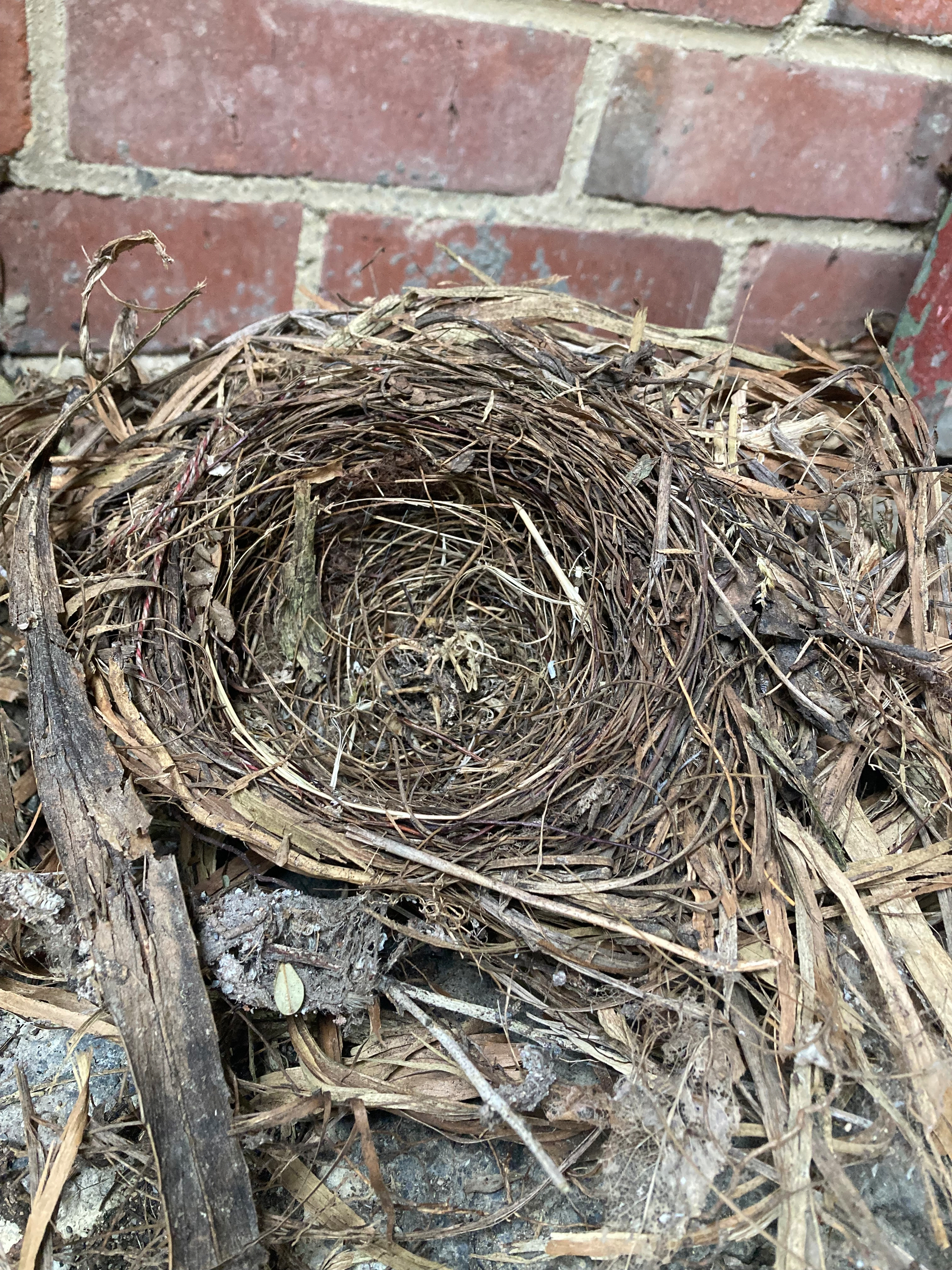
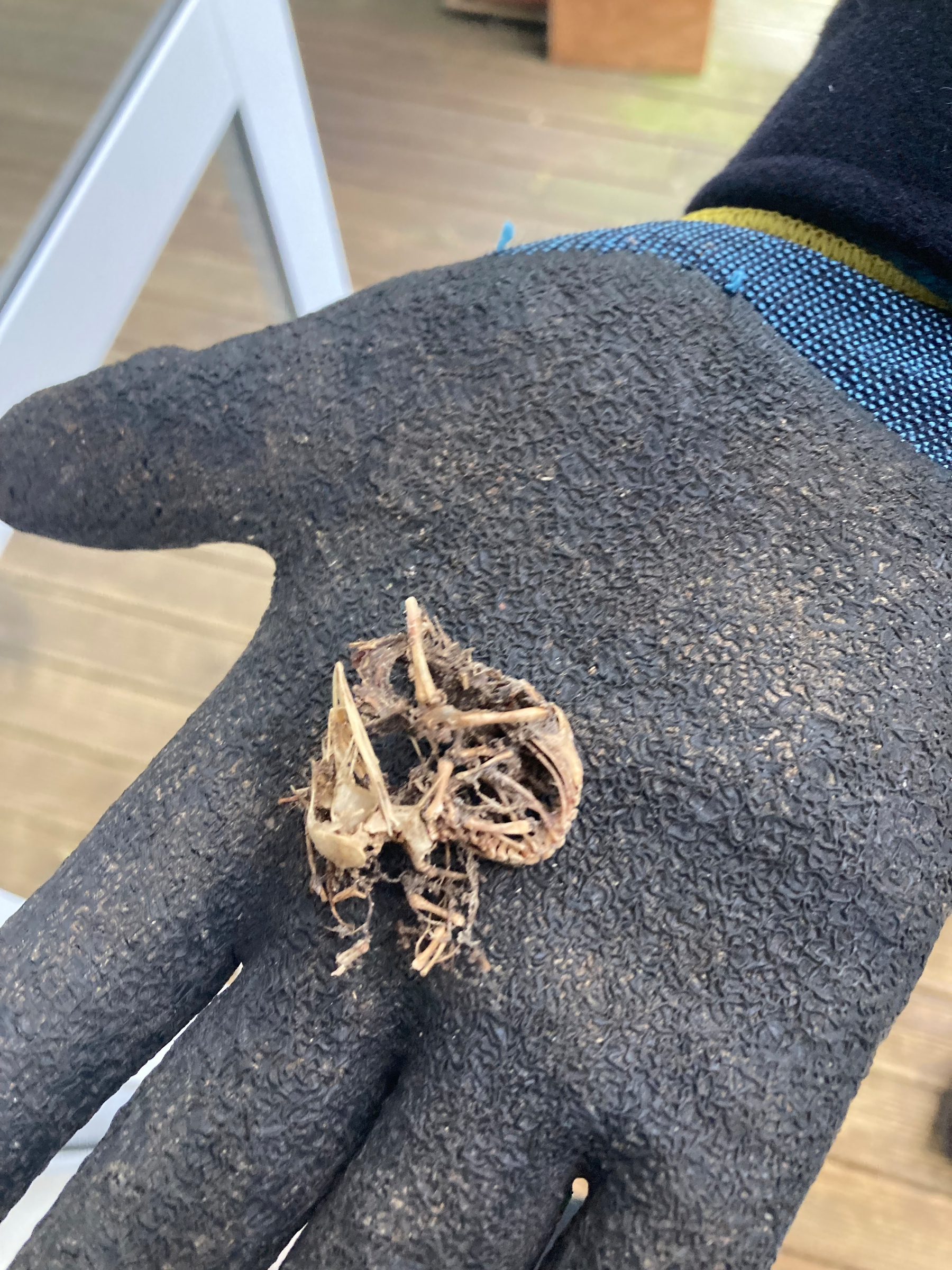
Something was stopping my parents' garage door closing, so I had a poke about to find out why. This is what came down and, as it did, my mind went to the “bereft elaboration” of the poem in Vincent O’Sullivan’s Seeing You Asked (1998). “It is one thing”, the poem says, to tell a child that birds “have their reasons”. It’s quite another, seeing the “cracked spilled work of instinct” to know that this is all, for them and for us, a mystery, the nest a message “franked / from places we do not understand, but fear.” “The child”, the poem ends, “consoles the cup of woven air.”
Alan Jacobs writes on James Schulyer’s friendship with Auden. I’ll read anything Jacobs writes about Auden. His edition of _The Shield of Achilles _ was one of my great reading thrills last year. Schulyer’s poems I don'’t know at all, but it seems like I should.
Nikhil Bailey’s debut crossword in the NYT today is such fun. Class has finished for the term and I’m doing archival work and am away from my routines, so I was in a different space and able to think my way through its charms. I doubt I’d have finished this one at home. The chance to get the feel of a setter’s sensibility and wit and approach in a good crossword like this one gives it a sense of wholeness and form. A little bit like the charm of a good poem! Lovely.
The Ogee & Manaia
Reece King’s exhibition The Ogee & Manaia, at the Hocken Library until 1st August, is big and busy and bustling and painterly. It’s a lot of fun. The works all gesture invitingly towards representation, but never quite get there. They invite interpretation. There’s a lot of everything: colour, shape, canvas, line. Some of the paintings look as if they might just have been pieces of graffiti on a stretch of city concrete, and then another look cancels the thought and they seem elegant, poised, ready. It’s exhuberant. It’s so much.
And what a title! A manaia, in Tina Makereti’s words, is a human form but one “going between the earthly and the spirit forms”. It’s a “figure of transformation and communication”. And as for the ogee . . . Chambers glosses it as “an S-shaped curve or line”. The OED has it as “an arch whose curve is formed by two S-shaped or double curves meeting at its apex” (it’s a word more than 700 years old). __Ogee __was the name of the doomed style magazine Nick Guest and Wani Ouradi worked on in Hollinghurst’s The Line of Beauty. Nick felt that it was time for a new Analysis of Beauty as he traced the bend along his lover’s back. Hogarth’s Analysis of Beauty mentions the ogee as “entirely composed of waving lines”. Oh Gee! OMG. Is King the O.G.?
Designing for friction. Vivienne Ming in the FT:
“A Harvard study published in 2019 captured this in a single, counterintuitive finding. Students challenged to wrestle with problems learnt significantly more than those in traditional lectures, yet they reported feeling as if they had learnt less. Our brains mistake the smooth, fluent sensation of being told something — whether in a lecture hall or by AI — for the harder, messier process of actually learning. And generative AI is the most fluent thing that humans have ever built.
To resist that requires choosing productive discomfort: being wrong, or doing the unglamorous work of interrogating an answer that looks correct.”
“It would seem, therefore, that the real objective of the Crown’s proposals is to reduce the legislative Treaty protections available to Māori”: Carwyn Jones’s evidence to the Waitangi Tribunal on proposals that “will, if enacted, constitute the most wide-ranging legislative breach of Te Tiriti in modern history.”
the dearest freshness deep down things
Zealandia by night! Last night, in fact. Not more than five minutes' walk from the entrance, we saw a kiwi pukupuku nosing it about in a ditch. Stopped by a bit of fencing and saw a wētā punga (Cook Strait giant weta). Wandered for a while and were shown, peeking out from a wee bit hole in a tree, the eye of a moko kakariki / green gecko. All in walking distance of the Parliament buildings in a capital city. Glorious.
If you have ‘40 000 words of your own original materials’ to hand you can always use them to, uh, write your own work. It’s not just that I don’t want CoPilot to write my emails or summarise documents for me or any of the other nonsense (I want it to leave me alone). If it’s your ‘extensive base of knowledge’ (what are these words!): you can summarise it yourself. That’s hard sometimes, sure; it’s also fun. And it’s how ideas happen.
Sydney academic used AI to write SMH opinion piece urging students to avoid using tech to ‘cut corners’ - The Guardian report on Western Sydney’s Pro Vice Chancellor for Quality and Integrity (I know) and her, subsequently withdrawn, CoPiloted _Sydney Morning Herald _ column.
There are basic, foundational, fundamental questions about quality and integrity raised in this article and in the responses quoted in it.
Anne Kennedy picks Bill Manhire’s ‘An Inspector Calls’ at NZ Poetry Shelf for ‘playing favourites’. She praises ‘the jazzy sound of it, the funny rhyme at the beginning, the noir feel, the angular look’. Yes!
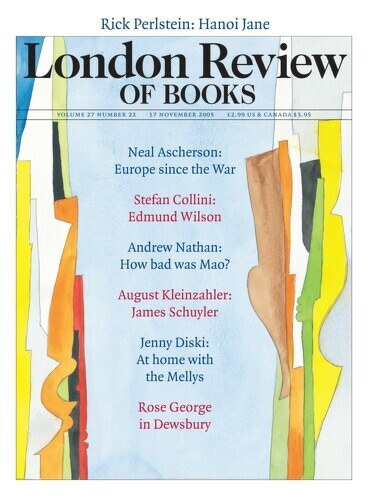
Readings on Lygon Street in Carlton used to sell the London Review of Books, and I’d pick up a copy every second month or so and read it at the pub across the road, on the corner of Lygon and Elgin Street. What was it called? I can’t remember. That, I’m sure, is where I first read Manhire’s poem - in that pub, printed in that paper - and the last line stuck with me since then. A Peter Steele poem from the same year - published in The Age? - ended, I’m sure, with the line ‘but this is Carlton’. I’ve never been able to find it since, and don’t know if I’ve imagined it now.
The pub is a vegan restaurant now, the tatty and cavernous second-hand book store that was next door to it burned down. Readings, last time I went, don’t stock periodicals:
There’s always a point at which a routine enquiry
turns into something else entirely
‘Despite the braying of the tech elite, we still have agency. We still have a choice. Players with many billions at stake have a vested interest in removing your agency, and reclaiming it hurts their bottom line. There’s no way to say for certain who will be right about AI in the end, but the current evidence points towards disaster. And it’s safe to acknowledge it.’ Marisa Kabas with some good hating.
‘The speed of the digital world connives to make us feel ashamed of certain sorts of slowly won knowledge. But to persist in caring about books, and to do so in the face of those who tell us not to, is to fight for a world that takes knowledge seriously. That fight will have to happen on many fronts; preserving the library alone will not rescue reading. But it is a good place to begin.’ Sheila Liming on ghost libraries.
‘So, why save the university?’ Lorna Finlayson on the how the British university is dying, and the ‘colossal and entirely avoidable act of self-harm on the part of a country [Britain] whose higher education sector has until recently been one of the few things it had going for it’
More from Magnifica Humanitas:
‘We must, then, avoid the “Babel syndrome,” namely the idolatry of profit that sacrifices the weak, a uniformity that neutralizes differences, and the pretense that a single language — even a digital one — can translate everything, including the mystery of the person, into data and performance. The risk of dehumanization — of building a future that excludes God and reduces the other to a means — is an ancient and ever-new temptation that today takes on a technical guise. Instead, let us choose the “way of Nehemiah,” which highlights the importance of working together to make the City of God a safe place for returning exiles. Rebuilding today means recognizing that, precisely from the plurality of voices and visions which, even though they sometimes remind us of the confusion caused by the diversity of spoken languages, a bright possibility emerges. Indeed, this is the possibility of building together, of transforming diversity into a resource and of making listening and dialogue the common ground upon which to cultivate justice and fraternity. Within this shared task, Christians discover their unique role of guiding actions toward God so that, in his light, pluralism does not dissipate into disorder, but instead, through the practice of synodality, it becomes the space in which humanity rediscovers its solid foundations and its final end.’